
Guest Article:
Narrators Who Work With Indie Authors Should Learn About Audiobook Distribution

INTRODUCTION
I’ve put out a call for guest writers to share articles on this Substack that pertain to writing, audiobooks, and narration. Occasionally, I’ll be posting these articles to give us all a little more perspective (beyond just mine) and to help deepen the breadth of the conversation here.
Please know that while I try to vet everyone, I don’t know everyone personally in the business. Guest articles are the writers’ thoughts and feelings, and I may or may not agree with them. This is to say, a guest article isn’t an automatic Stamp of Approval. That approval should come from the reader and whether the article resonates with you.
This first piece explores distribution of audiobooks, a topic helpful for writers producing their own work and the narrators who work with them.
If you have an article you’d like to post, let me know. If it’s a good fit, I’m happy to share it.
-Tanya-
GUEST ARTICLE BY REBECCA H. LEE
Narrators who work with Indie authors should learn about audiobook distribution.
Here’s Why:
A few years ago, I was working with an indie author I met through ACX. We were doing a Royalty Share Plus project, and she told me she was interested in distributing her audiobook wide.
I knew that wide distribution wasn’t allowed on RS+ deals. (If it was, I wouldn’t have been paid for any sales outside of Audible or iTunes), but I didn’t know much more than that about audiobook distribution.
At the time, I was hoping to do more PFH (Per Finished Hour) work in the future. That way I could earn more predictable income.
I also loved the idea that audiobooks I recorded would be available in libraries and in countries where Audible is not available.
Now in 2026, with so many changes happening in the audiobook distribution world, more and more authors are taking their books “wide”. But many of them don’t know how, and they may look to us (the narrator / producers) as the experts.
Many large publishers have their own distributors or have partnerships with distributors who handle all of their audiobooks. Narrators don’t need to worry about them since they handle it all themselves. When an indie author (or an author who owns the rights to their audio) decides to have their audiobook made (by you, an independent narrator / producer), they can use one of a few different distributors to get their audiobook onto the various retail and library platforms. Most indie authors nowadays know about ACX, but not about other distributors.
I jumped into the distribution game by producing and publishing a public domain book. I had heard Steven Jay Cohen talking about Spoken Realms on the (now defunct) Audiobook Speakeasy Podcast back in maybe 2018 or so.
When the pandemic hit, I was out of a few part-time gigs and short on audiobook projects, so I went down the rabbit hole of public domain audiobook publishing and distribution. I researched and compared various distributors and the requirements for each. I found an eligible book that I was excited about narrating.
I published it wide through a distributor, and then started adding other public domain projects to my portfolio and trying out various distributors. Eventually I did end up working with an indie author again, and after having had the experience on the other side of production, I was able to educate her on the various options in audiobook distribution (and negotiate a good PFH rate!).
THINGS TO KNOW
Here are a few key things to know, but I encourage narrators to do their own research, either by publishing a public domain audiobook, or by inquiring with various distributors about their process and the cut they take for their services:
1. ACX is a distributor, but they only distribute to Audible (Amazon), and iTunes.
2. Royalty Share is only available for ACX exclusive projects, but some production companies can split royalties for in-house productions.
3. Aggregate distributors, such as InAudio, Spoken Realms, and Authors Republic can distribute to around 40 different retailers (including Audible and Itunes), as well as library apps like Libby and Hoopla. (Note, Authors Republic no longer distributes public domain titles to Libby.)
4. Most aggregate distributors take out a percentage (usually 20-30%) after the retailers take their cut.
5. Some retailers, including Kobo and Google Play, allow direct distribution without a middle man.
6. In addition to payment terms, the accessibility of promo codes and the ability to set one’s own price may be factors worth considering when deciding on distribution.
If you find your schedule a bit sparse, take some time and learn what you can about audiobook distribution just in case you need to educate your next indie author about the options. Your new expertise just might give you the edge over someone else competing for the same job.
I have more information on “wide” (non-Audible exclusive) audiobook distribution on my website at https://becksvoice.com/wideaudiobooks.
ABOUT THE GUEST AUTHOR:
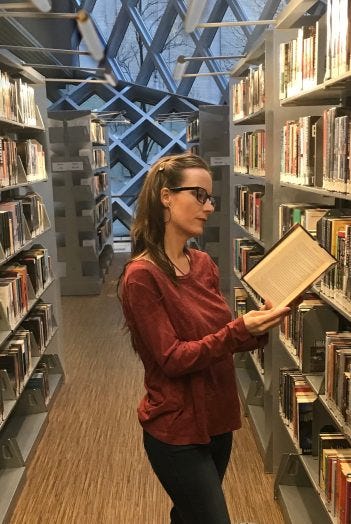
Rebecca H. Lee is an audiobook narrator, producer, and director from Seattle, WA.
NOTE FROM TANYA:
Audible/ACX is changing some of their distribution/payment structures, so we all need to educate ourselves about this. It looks like it might be a good way for listeners to hear more books, but a really bad way for narrators and writers to make the royalties they’ve been making. Of course the spin is More Opportunities! But opportunities for whom?
No one knows how this is going to play out yet, but we should all be aware of the changes and the potential for less payments for our hard work.
Did you like this article? Please click the heart and leave a comment for Rebecca and the audiobook community. How has knowing about distribution helped you with work with authors? What are your thoughts on the new royalty plan offered by ACX/Audible? Any concerns or input you have, please comment.
Thank you Rebecca! It is such a "rabbit hole" and a tough one to fully comprehend. I shall read your article linked to your website for more details. I know Paige Reisenfeld is a very well informed source for the details on this subject also. Yet, however simply it is explained it still leaves me with my head spinning a bit, once I try to delve into the rabbit hole further.
Really helpful, Tanya and Rebecca, thank you!